
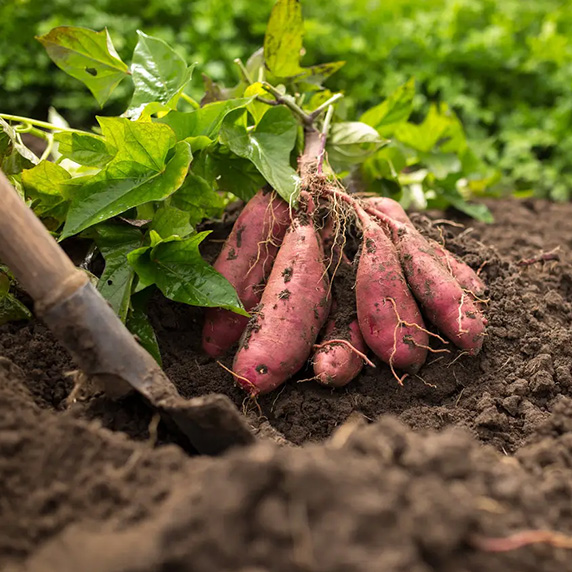
Harvesting Potatoes
Harvesting sweet potatoes is a relatively simple process, but timing and technique are important to ensure a good yield. Here are the general steps for harvesting sweet potatoes:
1. Timing the Harvest
-
When to Harvest: Sweet potatoes are typically ready for harvest about 90-170 days after planting, depending on the variety and growing conditions. You’ll know they’re ready when the vines start to yellow and die back. This often happens in late summer or fall, and you should harvest before the first frost.
-
Signs to Watch For: The leaves turning yellow and wilting is a signal that the sweet potatoes have matured. You can also test by gently digging around the base of a plant to check the size of the tubers.
2. Preparing the Area
-
Watering: Stop watering sweet potatoes about a week before you plan to harvest. This helps prevent excess moisture in the tubers, making them less likely to rot in storage.
-
Clear the Vines: Before you start digging, clear away any dead vines and foliage, but be careful not to damage the tubers.
3. Digging Up the Sweet Potatoes
-
Use a Fork or Shovel: To avoid damaging the tubers, use a garden fork or shovel to gently lift the soil around the sweet potato plant. Start about 6 inches away from the base of the plant and dig deep enough to avoid breaking the tubers.
-
Lift Carefully: After loosening the soil, gently lift the plant and shake off the soil to reveal the sweet potatoes.
4. Handling the Harvest
-
Cure the Tubers: Once harvested, sweet potatoes need to cure. This involves letting them sit in a warm, humid environment for 10-14 days (ideally around 80-85°F with 85-90% humidity). Curing helps to improve the flavor and healing of any small cuts.
-
Storage: After curing, store sweet potatoes in a cool, dry, and dark place at around 55-60°F. If stored correctly, sweet potatoes can last for several months.
5. Post-Harvest Care
-
Inspect for Damage: Check each sweet potato for signs of damage, such as cuts or bruising. Any damaged ones should be used quickly or discarded to prevent rot from spreading.
Published on April 8, 2025